
What Is the Penis Flower and Why Does It Smell So Bad?
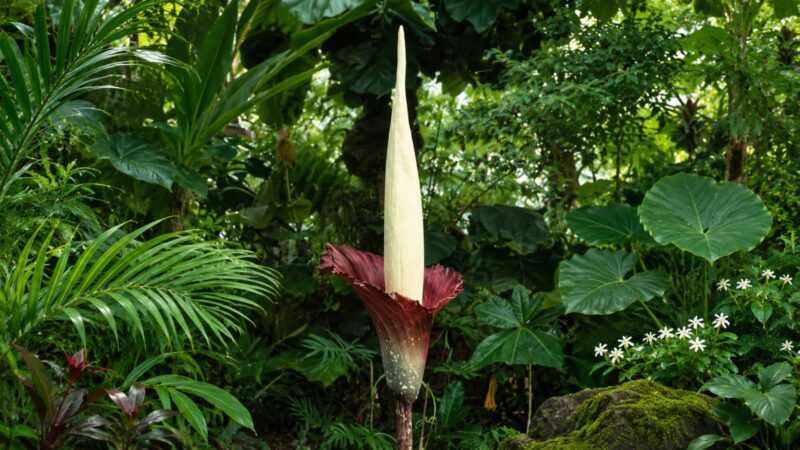
Some flowers attract attention with beautiful colors, delicate petals, and sweet fragrances. The penis flower takes a rather different approach.
It has an unusual shape, produces a smell resembling rotting flesh, and can draw crowds of curious visitors when it blooms.
Despite its rather unfortunate nickname, this is a fascinating example of how plants have adapted to survive and reproduce.
The penis flower’s terrible odor isn’t a sign that something has gone wrong. It’s part of a sophisticated pollination strategy that uses smell, heat, and visual deception to attract insects.
So, what exactly is the penis flower, why does it smell so awful, and what makes its brief appearance so remarkable?
Penis Flower: Quick Facts
The name penis flower is commonly associated with plants in the genus Amorphophallus, particularly the rare species Amorphophallus decus-silvae.
This tropical plant belongs to the Araceae family, which also includes familiar ornamental plants such as peace lilies and philodendrons.
Native to the forests of western Java, Indonesia, Amorphophallus decus-silvae produces a striking reproductive structure consisting of a tall central spike surrounded by a large, modified leaf-like bract.
The central spike, known as the spadix, is responsible for the plant’s suggestive appearance. In fact, the genus name Amorphophallus comes from Greek words meaning roughly “misshapen penis.”
However, there’s an important botanical distinction: what looks like one enormous flower is actually an inflorescence, a structure containing numerous tiny flowers clustered around the base of the spadix.
Why Does the Penis Flower Smell So Bad?
The penis flower smells like rotting meat because it needs to attract insects that are naturally drawn to decaying organic material.
While many flowering plants depend on bees and butterflies attracted by nectar and sweet fragrances, Amorphophallus decus-silvae uses a different strategy.
Its foul smell mimics the scent of a dead animal, attracting flies and other insects that might otherwise ignore the plant.
Botanists call this strategy carrion mimicry.
A gardener describes the intense, rotting-meat-like smell of a blooming Amorphophallus plant.
A gardener describes the intense, rotting-meat-like smell of a blooming Amorphophallus plant.
The Science Behind the Stench
The unpleasant smell comes from volatile organic compounds released during flowering.
Research on related Amorphophallus species, particularly the titan arum, has identified several chemicals responsible for the foul odor, including:
- Dimethyl disulfide: A pungent sulfur-containing compound associated with decomposing organic matter.
- Dimethyl trisulfide: A particularly powerful odorant that contributes to the smell of rotting flesh.
- Other volatile compounds: Depending on the species, these can create odors reminiscent of spoiled fish, rancid cheese, or sewage.
The exact chemical mixture varies among species, but the biological purpose is similar.
A 2024 study published in PNAS Nexus explored how the titan arum produces both heat and the sulfur-based compounds responsible for its notorious smell.
It Can Even Produce Its Own Heat
The penis flower has another remarkable trick.
During flowering, its reproductive structure can generate heat through a process called thermogenesis.
This warmth helps release and disperse the odor into the surrounding air, making it easier for insects to detect.
Think of it as a natural scent diffuser, except the fragrance is considerably less pleasant than anything you’d want in your home.
How Does the Penis Flower Get Pollinated?
The plant’s unusual appearance and smell work together to support reproduction.
Its flowering sequence is carefully timed:
Phase 1: Attracting Visitors
Phase 2: Releasing Pollen
Phase 3: Sending Pollinators Onward
This separation between the female and male flowering phases helps reduce the chances of self-pollination.
According to Hortus Botanicus Leiden, the entire spectacle of Amorphophallus decus-silvae generally lasts around two days.
Is the Penis Flower the Same as the Corpse Flower?
Not exactly, although the names are sometimes used interchangeably.
The famous corpse flower, or titan arum (Amorphophallus titanum), belongs to the same genus and shares many of the penis flower’s unusual characteristics.
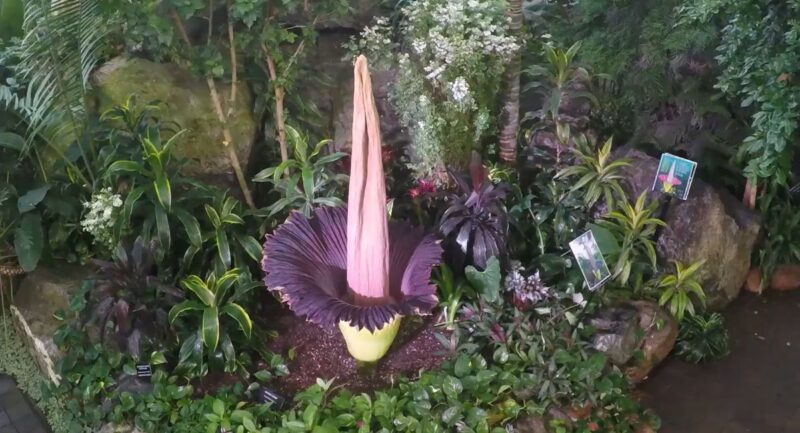
Penis Flower vs. Titan Arum
- Penis flower (Amorphophallus decus-silvae): A rare species native to western Java, distinguished by its phallic-looking spadix and strong carrion-like odor.
- Titan arum (Amorphophallus titanum): A giant flowering species native to Sumatra, famous for its enormous inflorescence and similarly unpleasant smell.
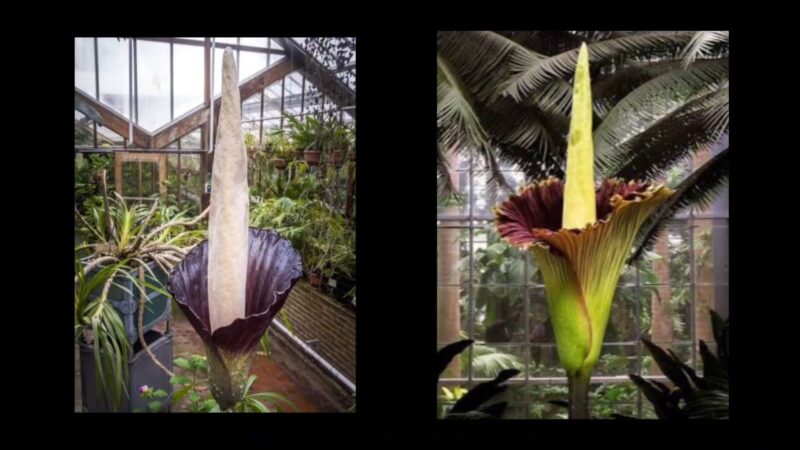
The titan arum is native to Sumatra, Indonesia, and can produce an inflorescence reaching approximately three meters tall.
It is famous for having the world’s largest unbranched inflorescence, although it does not produce the world’s largest individual flower. That distinction belongs to Rafflesia arnoldii.
Both plants use carrion-like odors to attract insects, but they are separate species with different natural distributions.
Why Is Seeing a Penis Flower Bloom So Rare?
Producing such a large reproductive structure requires considerable energy.
Rather than flowering continuously, these plants spend long periods growing and accumulating energy in underground storage organs.
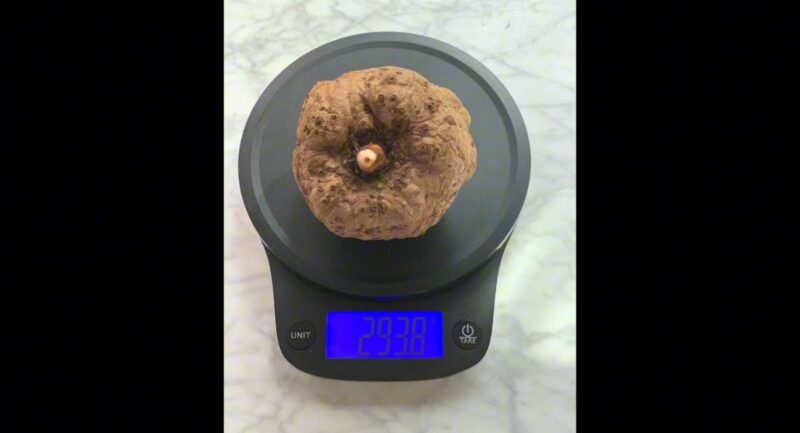
Once enough energy has been collected and conditions are favorable, the plant may finally produce its spectacular bloom.
The process is difficult to predict, even for experienced horticulturists.
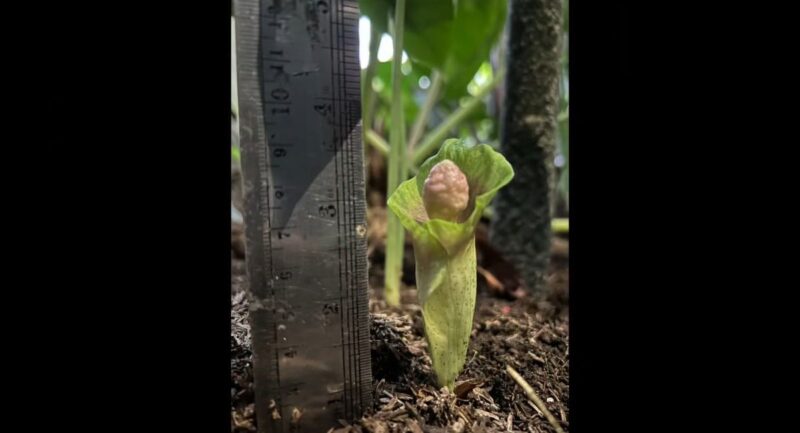
In October 2021, an Amorphophallus decus-silvae bloomed at Hortus Botanicus Leiden in the Netherlands. The event attracted significant attention because flowering specimens were exceptionally uncommon in European botanical collections.
Another specimen of the same species flowered at Leiden in October 2026, following a rare flowering announcement from the botanical garden. These events demonstrate both the rarity of the spectacle and the skill needed to cultivate the plants successfully.
Can You Grow a Penis Flower at Home?
Technically, some members of the Amorphophallus genus can be cultivated by experienced home growers.
However, Amorphophallus decus-silvae is extremely rare and isn’t a practical choice for most household gardens.
It requires consistently warm temperatures, high humidity, suitable growing media, and careful management of its growing and dormant periods.
A close-up of an Amorphophallus plant showing its distinctive mottled stalk and tropical growing environment.
A close-up of an Amorphophallus plant showing its distinctive mottled stalk and tropical growing environment.
For gardeners interested in unusual tropical plants, smaller and more readily available Amorphophallus species may be worth investigating.
Even then, remember that flowering can take years, and some species produce extremely unpleasant odors.
Why Is the Penis Flower Important?
Beyond its strange appearance and offensive smell, the penis flower offers a remarkable example of plant adaptation.
It demonstrates that successful pollination doesn’t always depend on bright petals or pleasant fragrances. Sometimes, attracting the right insect means producing a smell that humans find revolting.
Its rarity also makes conservation particularly important.
The natural habitat of Amorphophallus decus-silvae faces increasing pressure, and botanical gardens help protect the species through cultivation, research, and pollen preservation.
What smells terrible to us can be an essential survival tool for a plant.
The penis flower might never win a prize for its fragrance, but its unusual biology makes it one of the plant kingdom’s most intriguing botanical curiosities.