
How to Grow Borage at Home and When to Harvest It?
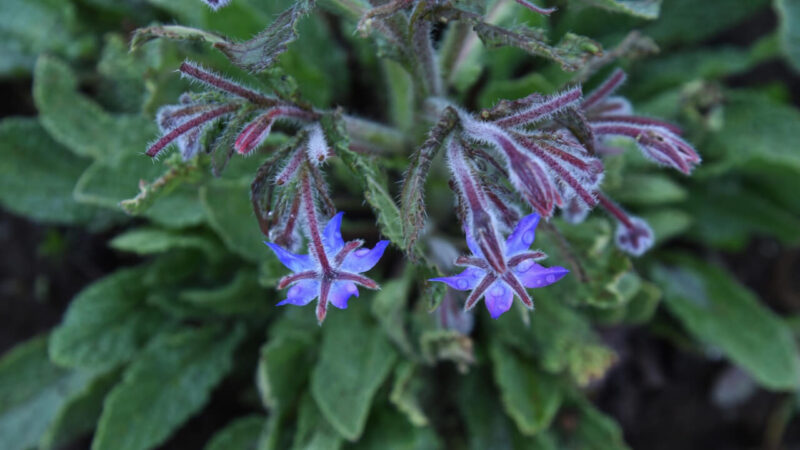
Borage is one of those garden plants that offers plenty of rewards without demanding much attention. With its bright blue, star-shaped flowers, fuzzy leaves, and impressive ability to attract bees, this fast-growing herb can bring life and color to almost any garden.
Known botanically as Borago officinalis, borage is an annual herb traditionally grown for its ornamental flowers, cucumber-like fragrance, and culinary uses. It grows readily from seed, tolerates a range of soil conditions, and often returns the following year through self-seeding.
But growing borage successfully involves more than scattering seeds. Knowing where to plant it, how to care for it, and when to harvest its leaves, flowers, and seeds can make a noticeable difference.
Here’s what you need to know.
Borage Growing Requirements at a Glance
Before planting, it helps to understand what borage needs to thrive.
| Growing Factor | Borage Requirements |
| Botanical name | Borago officinalis |
| Plant type | Annual herb |
| Sunlight | Full sun to partial shade |
| Soil | Well-draining, moderately fertile |
| Planting season | Spring, after the danger of frost |
| Sowing depth | Approximately ¼–½ inch (0.5–1 cm) |
| Plant spacing | 12–18 inches (30–45 cm) |
| Germination | Usually 7–14 days |
| Mature height | Approximately 2–3 feet (60–90 cm) |
| Flower harvest | Often begins around 8–10 weeks after sowing |
These are general guidelines. Growth and flowering times vary with temperature, sunlight, moisture, and local growing conditions.
How to Grow Borage From Seed
Borage develops a substantial taproot, making direct sowing preferable to transplanting established seedlings.
The good news? Starting borage from seed is straightforward, even for gardeners with little experience.
1. Choose a Sunny Location
Borage performs best in a spot receiving at least six hours of direct sunlight daily.
It tolerates partial shade, particularly in warmer climates, but plants growing in sunnier locations generally produce more flowers.
Choose somewhere with adequate space. Mature borage plants can become surprisingly broad, and their branching stems may crowd smaller herbs.
2. Prepare the Soil
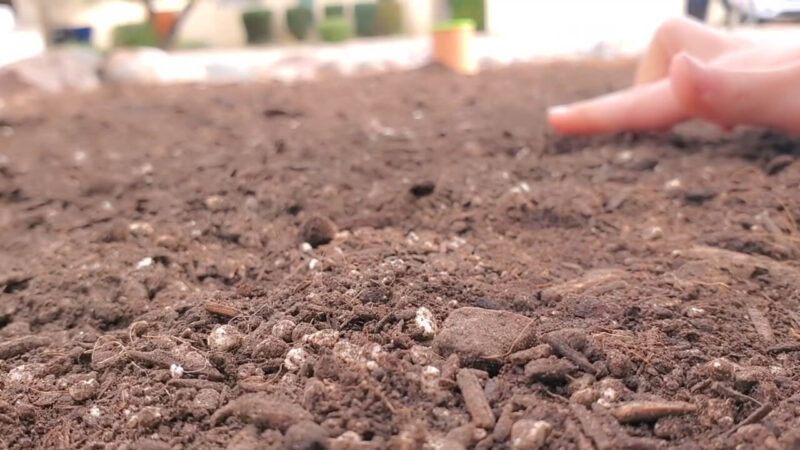
Borage grows in most ordinary garden soils, provided drainage is good.
Before planting:
- Remove weeds and loosen the top several inches of soil.
- Mix in a little mature compost if the soil is particularly poor.
- Break apart large clumps to create a suitable seedbed.
- Avoid sites where water regularly collects after rainfall.
Gardening tip: Borage doesn’t require exceptionally rich soil. Excessive fertilization is usually unnecessary and can encourage leafy growth rather than a balanced display of flowers.
3. Sow the Seeds Directly
Wait until the risk of damaging spring frosts has passed and the soil has begun warming.
Then follow these steps:
- Make shallow holes approximately ¼–½ inch deep.
- Place seeds in the prepared soil.
- Cover lightly and gently firm the surface.
- Water carefully without washing the seeds away.
- Keep the soil consistently moist until germination.
Seedlings usually emerge within one to two weeks under favorable conditions.
Once they develop their first true leaves, thin them to approximately 12–18 inches apart.
For a longer flowering season, consider sowing another small batch every three to four weeks while conditions remain suitable.
The University of Maryland Extension also recommends successive sowings to extend the harvest period.
Can You Grow Borage in Containers?
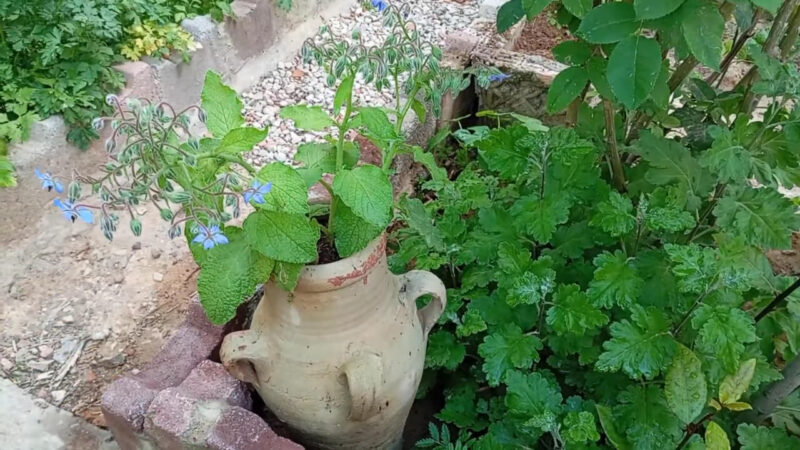
Absolutely. Borage can grow in a container, making it an option for patios, balconies, and small gardens. However, it needs more space than compact herbs such as thyme or chives.
Choose a container at least 12 inches (30 cm) wide and sufficiently deep to accommodate its taproot. Ensure it has drainage holes and fill it with quality, well-draining potting mix.
One plant per container is generally sufficient.
Container-grown borage usually needs more frequent watering than plants growing directly in garden soil, especially during hot weather.
How to Care for Borage Plants
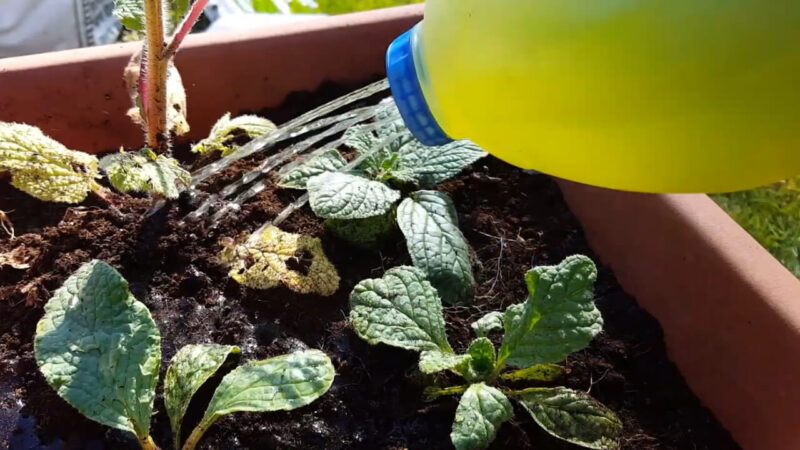
Once established, borage requires relatively little maintenance.
Watering
Young seedlings benefit from regular moisture while their roots develop.
Established plants tolerate occasional dry periods, although prolonged drought can reduce growth and flowering.
Water deeply when the soil becomes dry, and avoid leaving the roots in waterlogged conditions.
Fertilizing
Borage generally grows well without additional fertilizer in reasonably fertile soil.
If plants appear weak because the soil is nutrient-poor, a modest application of balanced fertilizer may help.
Supporting Tall Plants
Mature borage can develop large, branching stems that become heavy with flowers.
Plants growing in exposed or windy locations may benefit from a small stake or other support.
According to the Royal Horticultural Society, borage generally needs little pruning and rarely requires support, although sprawling plants can occasionally benefit from staking.
When Is Borage Ready to Harvest?
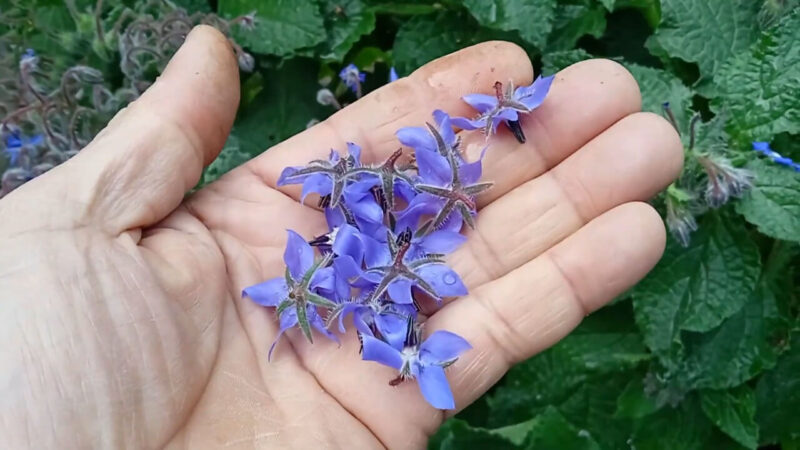
The ideal harvesting time depends on which part of the plant you want to collect.
Borage produces leaves early in its development, followed by clusters of distinctive blue flowers.
Harvesting Borage Leaves
Young leaves are traditionally collected before the plant begins flowering.
At this stage, they are smaller, more tender, and less coarse than mature leaves.
Older borage foliage develops increasingly noticeable bristles, which can make handling uncomfortable.
For harvesting:
- Select healthy, young leaves.
- Use clean scissors to cut individual leaves.
- Avoid removing too much foliage at once.
- Wear gloves if the bristly stems irritate your skin.
Fresh leaves have a mild cucumber-like aroma, although their traditional culinary use comes with important safety considerations discussed below.
Harvesting Borage Flowers
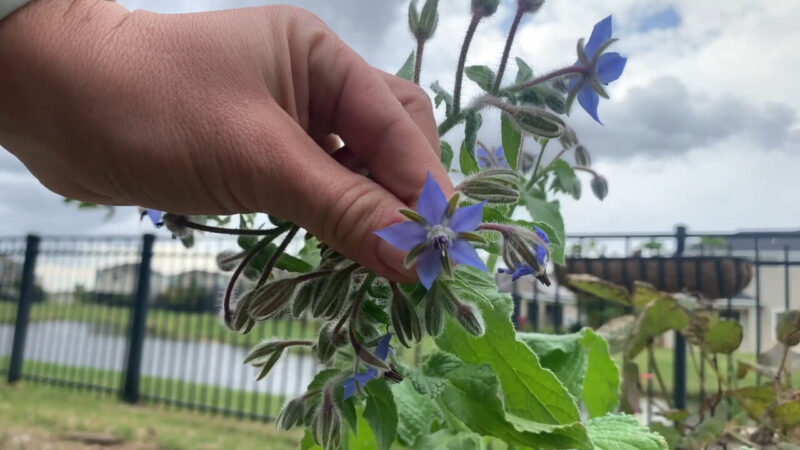
Borage flowers are best harvested shortly after they open fully.
The five-pointed blossoms are typically vivid blue, although some varieties produce white flowers.
Pick flowers during dry weather, preferably after morning dew has evaporated.
Handle them gently, as the delicate petals bruise easily.
Regular flower picking can help encourage continued blooming while the plant remains healthy.
If you’re growing borage primarily for pollinators, leave plenty of blossoms for visiting bees.
Harvesting Borage Seeds
To collect seeds for future planting, allow some flowers to mature naturally.
As the flowers fade, they develop small, hard seeds that darken as they ripen.
Collect mature seeds before they drop to the ground, then allow them to dry thoroughly.
Store them in a labeled paper envelope or another suitable dry container in a cool, dark location until the next planting season.
Remember: Borage readily self-seeds. If you don’t want volunteer seedlings appearing throughout your garden, remove spent flowers before they produce mature seeds.
Is Homegrown Borage Safe to Eat?
View this post on Instagram
Although borage flowers and leaves have a long history of culinary use, there is an important precaution worth understanding.
Borage naturally contains pyrrolizidine alkaloids (PAs), compounds that can harm the liver and may pose additional long-term health risks.
Research published in Food Control has confirmed the presence of these compounds in borage leaves and flowers.
The UK Food Standards Agency also advises against consuming borage-leaf infusions because of potentially high PA concentrations.
For this reason, regular consumption of borage leaves or flowers is not recommended. Avoid homemade medicinal preparations and concentrated teas, and don’t assume the flowers are free of these substances.
Growing borage for its ornamental beauty and pollinator benefits is an excellent alternative that doesn’t require consuming the plant.
Common Borage Growing Problems
Borage is relatively resilient, but a few issues can occur.
- Powdery mildew: A white, powdery coating sometimes develops on leaves, particularly later in the growing season. Adequate spacing and good airflow help reduce problems.
- Wilting: Persistent wilting may indicate insufficient moisture or waterlogged roots. Check soil conditions before adding more water.
- Yellowing leaves: Older leaves naturally deteriorate, but widespread yellowing can indicate poor drainage or other growing stress.
- Unwanted seedlings: Self-seeding can become a nuisance when borage is allowed to spread freely. Collecting seeds or removing spent plants helps keep growth under control.
FAQs
Does borage grow back every year?
Borage is an annual, meaning individual plants complete their life cycle within one growing season. However, fallen seeds often germinate the following year, creating the appearance of a returning perennial.
How long does borage take to flower?
Under favorable conditions, borage may begin flowering approximately eight to ten weeks after sowing. Cool temperatures, limited sunlight, and other environmental factors can delay flowering.
Does borage attract bees?
Yes. Borage flowers provide nectar and are particularly attractive to honeybees, bumblebees, and other pollinating insects. This makes borage a useful addition near vegetable gardens and wildlife-friendly planting areas.
Final Thoughts
Growing borage at home is a simple way to add color, texture, and pollinator activity to your garden.
Give it a sunny location, well-draining soil, and enough room to spread, and it will generally reward you with vigorous growth and distinctive star-shaped flowers.
Harvest young leaves before they become coarse, collect flowers soon after opening, and save mature seeds if you want to grow another generation.
Whether you’re filling a garden border or brightening a patio container, borage is a rewarding plant to grow, and an especially welcome sight when the bees arrive.