
Spigarello vs Broccoli Rabe, What Is the Difference?
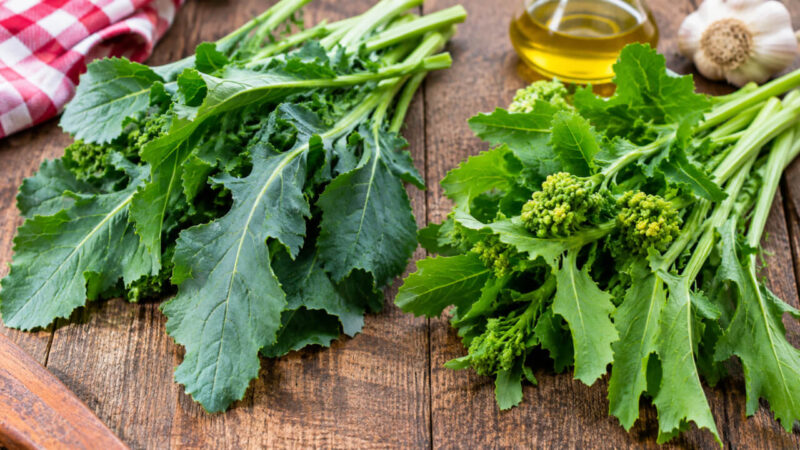
Italian cooking has a soft spot for leafy greens, especially those that taste even better after a few minutes in a hot pan with olive oil and garlic.
Spigarello and broccoli rabe fit that description, although confusing one for the other can lead to a surprisingly different dinner.
Both belong to the Brassica genus, but their flavors and growing habits set them apart. Spigarello has tender, often curly leaves with a mild, slightly sweet flavor, while broccoli rabe brings noticeable bitterness, peppery notes, and small flower buds.
Choosing between them isn’t complicated once you know what to look for.
A few differences in appearance, flavor, and harvesting can help you decide which deserves a spot in your garden or on your plate.
Key Differences Between Spigarello and Broccoli Rabe
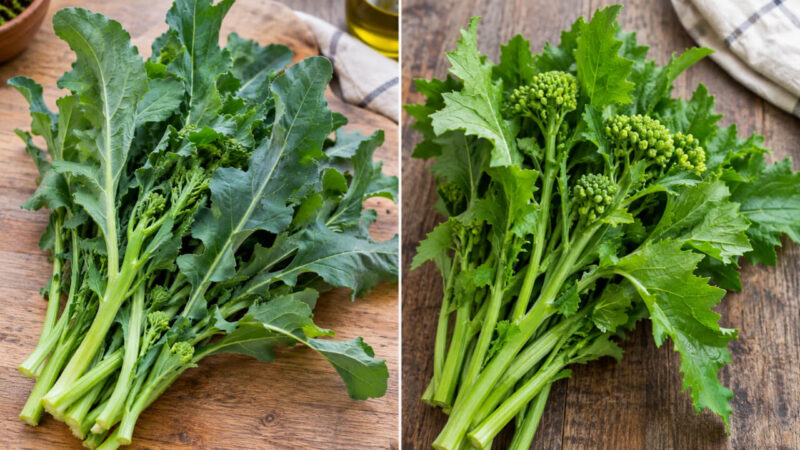
Spigarello, also called spigariello, is a leafy broccoli type traditionally grown in southern Italy.
Gardeners value it for its long, narrow leaves, which can be flat or curly depending on the variety. Its bluish-green foliage resembles a cross between kale and broccoli leaves, although its texture is generally more delicate.
Broccoli rabe, also known as rapini, belongs to a different species and is more closely related to turnips.
Its jagged green leaves surround slender stems and clusters of small flower buds that look like miniature broccoli heads.
Flavor is probably the biggest difference you’ll notice in the kitchen. Spigarello tastes mild, slightly sweet, and gently reminiscent of broccoli.
Broccoli rabe has a stronger personality, with pronounced bitterness, earthy notes, and a peppery finish.
Here’s how they compare:
| Feature | Spigarello | Broccoli Rabe |
| Appearance | Narrow, often curly, bluish-green leaves | Jagged green leaves and small flower buds |
| Flavor | Mild, slightly sweet, broccoli-like | Bitter, earthy, slightly peppery |
| Texture | Tender leaves and stems | Leafy greens with firmer stems |
| Edible parts | Mainly leaves and tender stems | Leaves, stems, and flower buds |
| Harvesting | Repeated leaf harvests | Tender shoots and unopened flower buds |
| Best uses | Sautéing, soups, pasta | Sautéing, pasta, braising |
Another distinction matters if you’re planning to grow them. Spigarello is primarily cultivated for its foliage, allowing gardeners to pick individual leaves as needed.
Broccoli rabe is usually harvested for its tender shoots, including the developing flower clusters.
Neither vegetable is particularly difficult to prepare, but they don’t bring the same flavor to a recipe.
Can You Use Spigarello Instead of Broccoli Rabe?
Yes, spigarello makes a good substitute for broccoli rabe in many recipes. Both greens respond well to sautéing, steaming, braising, and cooking with pasta.
Expect a noticeable difference in flavor, though.
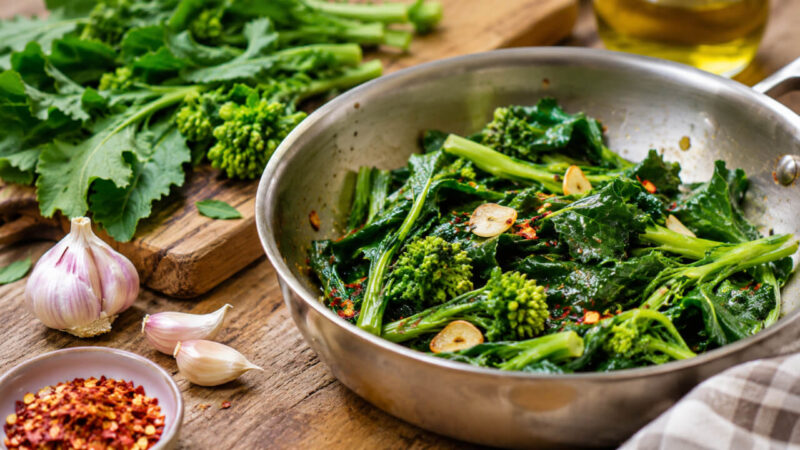
Consider a traditional Italian pasta dish featuring broccoli rabe, garlic, olive oil, and red pepper flakes. Broccoli rabe contributes a characteristic bitterness that balances the oil and gives the dish a sharper finish.
Replace it with spigarello, and the result becomes milder and slightly sweeter. Garlic and red pepper flakes will become more noticeable without the bitter greens competing for attention.
Neither version is necessarily better, but the substitution changes the character of the meal.
Preparation also differs slightly.
Broccoli rabe often benefits from blanching before sautéing, especially if you find its bitterness too strong. Two minutes in boiling water, followed by a quick dip in ice water, can help soften the stalks and mellow the flavor.
Drain the greens well before adding them to a hot skillet.
Spigarello generally needs less attention. Tender leaves can go directly into a pan with olive oil and garlic, cooking until wilted and tender.
Larger or older leaves may need a few extra minutes.
A few practical adjustments make substitutions easier:
- For pasta – Use either green, but expect spigarello to produce a gentler flavor.
- For soups – Add spigarello toward the end of cooking to preserve its tender texture. Broccoli rabe can tolerate a little more cooking.
- For sautéed greens – Both pair well with garlic, olive oil, lemon, and red pepper flakes.
- For braised dishes – Broccoli rabe works particularly well when a stronger, slightly bitter flavor is welcome.
Quantity can usually stay similar when substituting one for the other, especially when measuring prepared greens by weight.
One final consideration is the stems. Broccoli rabe often has firmer stems that benefit from slightly longer cooking, while tender spigarello stems typically soften more quickly.
Growing Spigarello vs. Broccoli Rabe
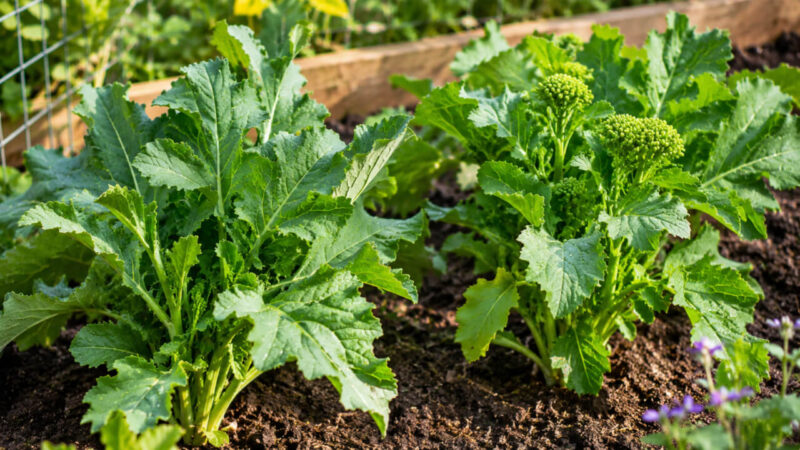
Cool weather suits both vegetables. Like many members of the cabbage family, spigarello and broccoli rabe generally produce their best-quality greens during spring and fall, when temperatures are moderate.
Hot weather can encourage flowering and seed production, a process gardeners call bolting. Once plants start bolting, leaves may become tougher or more bitter.
Both crops prefer fertile, well-drained soil with consistent moisture. A sunny location works well, although some afternoon shade can help during warmer periods.
Broccoli rabe also gets moving fairly quickly after planting. Seeds can emerge in 4 to 7 days when conditions are suitable, with germination possible at temperatures between 45°F and 85°F.
That doesn’t mean the plants enjoy summer heat, though. Cooler growing conditions are still preferable for producing tender greens.
Growing and Harvesting Spigarello
Spigarello is a useful choice for gardeners who enjoy picking fresh greens regularly rather than harvesting an entire plant at once.
Plants develop clusters of leafy shoots, and individual leaves can be removed while the growing center continues producing new foliage.
Spigarello isn’t necessarily a slow grower, either. Spigarello Liscia can reach harvesting maturity in 45 to 70 days, with small broccoli-like heads sometimes developing around the 70-day mark.
Gardeners interested in the leaves don’t need to wait for those heads to appear.
Harvest young, tender leaves regularly, taking care not to strip the plant completely. Leaving enough healthy foliage supports continued growth and additional harvests.
Spigarello is particularly practical in a small vegetable garden because one healthy planting can provide greens over an extended period during suitable weather.
Leaf production will eventually slow as temperatures rise or plants begin flowering, but regular harvesting can help gardeners make good use of the growing season.
Growing and Harvesting Broccoli Rabe
View this post on Instagram
Broccoli rabe is generally a faster crop, making it attractive for gardeners who want an early harvest or need to fill a short gap in their planting schedule.
Not every broccoli rabe variety follows the same schedule. Spring Raab typically matures in 40 to 45 days, while Zamboni can take 45 to 70 days. Spring Raab also offers better resistance to early bolting, which can be helpful when spring temperatures start climbing sooner than expected.
Depending on the variety and growing conditions, some broccoli rabe cultivars can be ready for harvest in approximately 40 to 60 days.
Plants produce leafy stems topped with clusters of developing flower buds. Harvesting usually takes place while those buds are still closed, before the yellow flowers open.
Cut the tender shoots with their attached leaves and buds. Some varieties can produce additional side shoots after the first cutting, although regrowth varies.
Timing matters more with broccoli rabe. Waiting too long can result in open flowers, tougher stems, and a stronger bitter flavor.
For gardeners who like predictable harvests, successive plantings every couple of weeks during cool weather can provide a more consistent supply.
Spigarello offers a different advantage. Rather than relying on several short plantings, gardeners can harvest its leaves repeatedly while the plants are actively growing.
Which One Should You Choose?
Your preference for bitter greens is a good place to start.
Spigarello makes sense if you enjoy tender vegetables with a mild flavor. Its leaves work well in everyday cooking, especially when you want something a little more substantial than spinach without the stronger bitterness associated with broccoli rabe.
Repeated harvesting also makes it a practical vegetable for gardeners who prefer collecting a handful of leaves whenever they need them.
Broccoli rabe is the better option if you enjoy assertive greens. Its bitter, peppery character pairs particularly well with garlic, olive oil, sausage, beans, and pasta.
Traditional Italian recipes often depend on that bitterness, so swapping in a milder green may produce a dish that tastes noticeably different.
Growing space and harvesting preferences matter, too.
If you want a fast crop that can be harvested relatively quickly, broccoli rabe has an advantage. If you’d rather maintain a planting that provides multiple harvests during favorable weather, spigarello is worth considering.
Availability may also influence your decision. Broccoli rabe is generally easier to find in American grocery stores and seed catalogs, while spigarello is less common and may require a little searching.
For gardeners with enough space, growing both is a reasonable choice. You can compare their flavors in the same dishes and see which performs better in your local conditions.