
Homemade Lavender Salt Recipe for Cooking and Baking
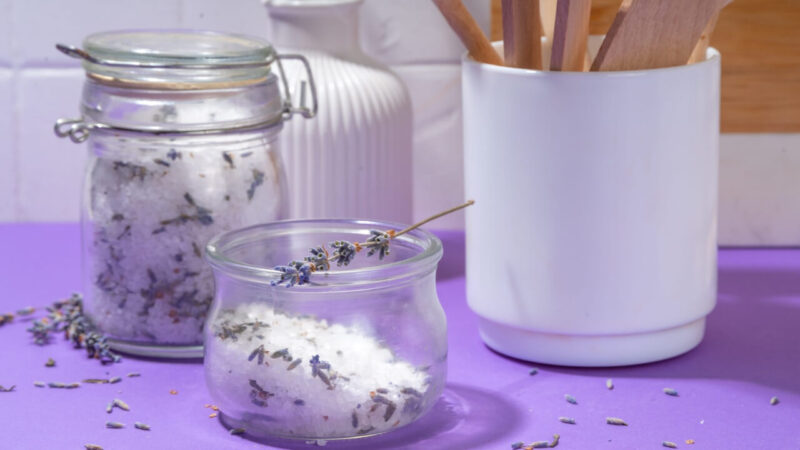
Lavender might be best known for its fragrant purple flowers, but its uses extend well beyond garden borders and scented sachets. In the kitchen, this aromatic herb can bring a delicate floral character to everything from roasted vegetables to buttery shortbread.
One of the simplest ways to enjoy it is by making homemade lavender salt.
With just two ingredients and about five minutes of preparation, you can create a versatile seasoning that combines the familiar taste of sea salt with lavender’s distinctive herbal fragrance.
The result is surprisingly adaptable. A small pinch can brighten roasted potatoes, complement grilled chicken, or add an unexpected finishing touch to chocolate desserts.
Better still, if you grow lavender at home, this recipe offers a practical way to make use of your harvest throughout the year.
Here’s how to make lavender salt, choose the right flowers, and use your homemade blend in everyday cooking and baking.
Choosing the Best Lavender for Cooking
Not every lavender plant is equally suitable for culinary use.
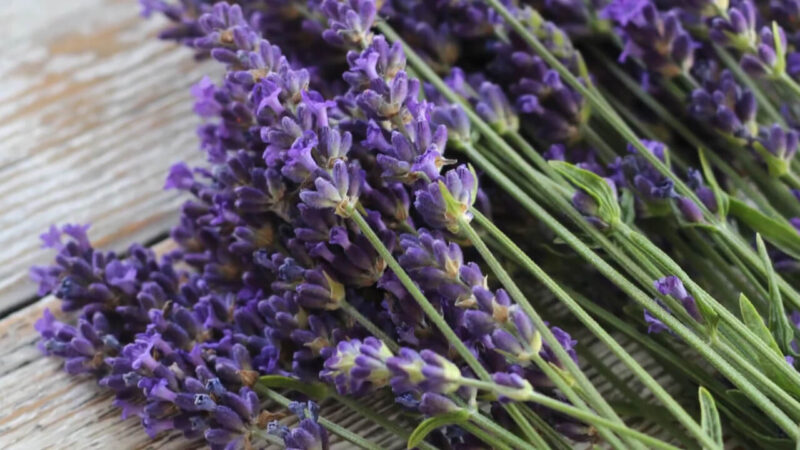
For the best flavor, choose English lavender (Lavandula angustifolia), sometimes called true lavender.
According to Purdue Extension’s lavender guidance, English lavender is the type most commonly used in cooking.
Its relatively sweet, floral character generally makes it preferable to more strongly camphor-scented varieties.
Before harvesting or purchasing lavender, keep three things in mind:
- Choose food-safe flowers. Purchase dried lavender specifically labeled for culinary use, or harvest from a correctly identified plant that hasn’t been treated with chemicals unsuitable for edible crops.
- Avoid decorative lavender. Flowers sold for potpourri, crafts, or floral arrangements may have been treated with products that aren’t intended for food.
- Use dried buds rather than fresh flowers. Completely dried lavender is more suitable for a shelf-stored salt blend because it won’t introduce unwanted moisture.
Never substitute lavender essential oil for dried flowers in this recipe. Essential oils are highly concentrated, and products intended for aromatherapy aren’t necessarily appropriate for cooking.
Homemade Lavender Salt Recipe
- Prep Time: 5 minutes
- Resting Time: 24 hours recommended (optional)
- Yield: Approximately ½ cup for the volume-based version
- Difficulty: Easy
Ingredients
For General Cooking:
- ½ cup coarse sea salt or kosher salt
- 1 teaspoon dried culinary lavender buds
For Baking (Precise Weight-Based Recipe):
- 100 g fine sea salt
- 1 teaspoon dried culinary lavender buds
These are two alternative versions of the recipe, not ingredients to combine into one batch. The 100 g measurement is particularly useful for baking, where accurately measuring salt helps maintain the intended balance of flavors.
Important: The 100 g of salt is the amount used to prepare an entire batch of lavender salt. It is not the amount you should add to a cake, batch of cookies, or loaf of bread.
Optional: For an especially gentle floral flavor, start with ½ teaspoon of dried lavender instead of a full teaspoon.
Equipment
- Small mixing bowl
- Mortar and pestle or spice grinder (optional)
- Measuring spoons
- Digital kitchen scale (recommended for baking)
- Clean, dry glass jar with an airtight lid
Step-by-Step Instructions
1. Inspect the Lavender
Check the dried lavender buds and remove any remaining stems, leaves, or unwanted plant material. The buds should feel completely dry and crumble easily.
2. Lightly Crush the Flowers
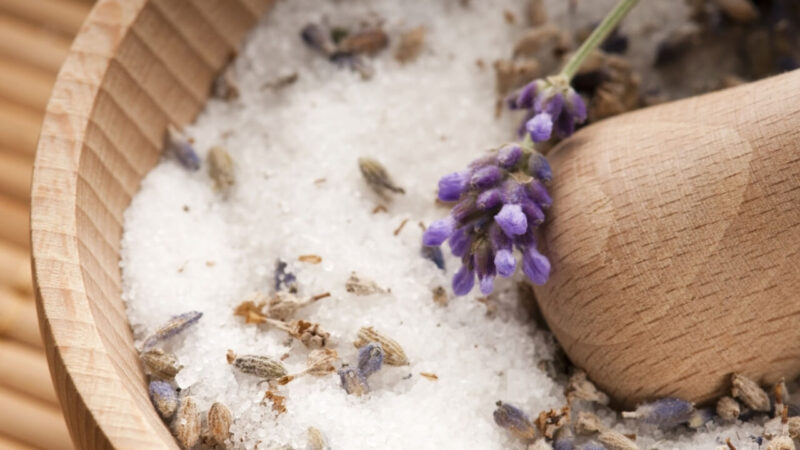
Place the lavender in a mortar and pestle and gently crush it a few times to release its fragrance.
Avoid grinding everything into a very fine powder, particularly if you prefer a salt with visible lavender pieces.
3. Combine the Ingredients
Add your chosen amount of salt to a small bowl, followed by the crushed lavender.
For the baking version, weigh exactly 100 g of fine sea salt using a digital kitchen scale before adding the lavender.
Stir thoroughly until the buds are distributed throughout the salt.
For a finer seasoning, you can briefly pulse the ingredients together in a spice grinder. If you’re using delicate flaky salt, mixing by hand will help preserve its texture.
4. Transfer to a Jar
Spoon the mixture into a completely dry glass jar and secure the lid.
Label the container with the ingredients and preparation date.
5. Allow the Flavors to Develop
You can use lavender salt immediately, but letting it rest for approximately 24 hours gives the fragrance time to become more evenly distributed.
Before using a generous amount, try a tiny sprinkle on a piece of buttered bread or a cooked potato.
If the flavor is too strong, simply dilute the mixture with additional salt.
Recipe Tip: Start with less lavender than you think you’ll need. You can always add more, but an overpowering floral flavor is difficult to disguise once food has been seasoned.
How to Harvest and Dry Lavender at Home
View this post on Instagram
Growing your own culinary lavender gives you greater control over the flowers you use.
English lavender generally prefers full sunlight, well-draining soil, and relatively dry conditions once established.
For culinary harvesting, collect flower spikes when the buds are developed and some flowers are beginning to open. Avoid waiting until the blooms are old and fading.
Harvest on a dry morning after the dew has evaporated.
To prepare the flowers:
- Cut healthy flower stems using clean garden scissors.
- Inspect them for insects, dirt, or damaged material.
- Gently rinse if necessary, shake off excess water, and allow surface moisture to dry.
- Tie the stems into small bundles and hang them upside down somewhere dry, shaded, and well-ventilated.
- Once completely dry, rub the flower heads gently to release the buds.
Drying may take several days or longer, depending on humidity and airflow.
The Oregon State University Extension guide explains that herbs should crumble readily when sufficiently dry and that excessive heat can reduce their flavor.
Store the finished buds in an airtight container away from heat and sunlight until you’re ready to use them.
How to Use Lavender Salt in Cooking and Baking
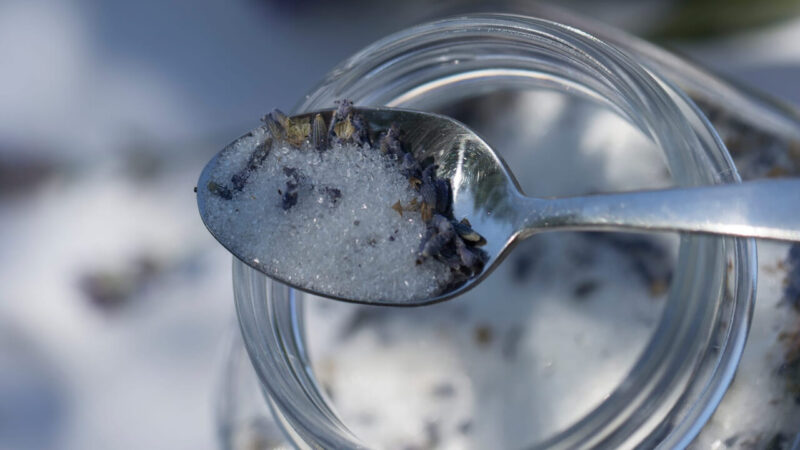
Lavender salt works best when it adds a quiet background note rather than becoming the main flavor.
It’s particularly useful as a finishing salt because a light sprinkle lets you appreciate its fragrance without overwhelming the dish.
Here are some combinations worth trying:
| Food | How to Use Lavender Salt |
| Roasted potatoes | Sprinkle lightly after roasting with olive oil. |
| Chicken or lamb | Use as part of a simple herb seasoning. |
| Roasted carrots | Add a pinch alongside honey or thyme. |
| Shortbread cookies | Sprinkle a few grains on top before baking. |
| Dark chocolate | Finish chocolate bark or brownies with a tiny pinch. |
| Focaccia | Scatter sparingly over the dough before baking. |
For Savory Cooking
Lavender’s herbal qualities work especially well with ingredients that already pair naturally with rosemary or thyme.
Try combining a small amount of lavender salt with olive oil, black pepper, and lemon zest for roasted vegetables.
It can also complement grilled chicken, lamb, or white fish.
For a simple introduction, toss roasted potatoes with a little lavender salt just before serving. The potatoes’ mild flavor makes it easier to appreciate the seasoning without too many competing ingredients.
For Baking and Desserts
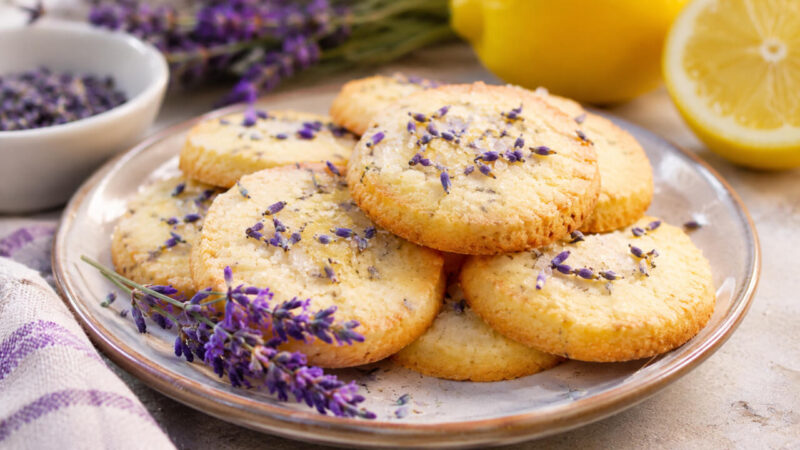
Lavender salt may sound unusual in desserts, but the combination of sweetness, salt, and floral aroma can be particularly appealing.
Try a light finishing sprinkle on lemon shortbread, chocolate brownies, or homemade caramel.
When incorporating lavender salt directly into a baking recipe, use it to replace some or all of the salt already required, rather than adding extra salt.
For accurate measurements, use the weight-based blend prepared with 100 g of fine sea salt and 1 teaspoon of dried culinary lavender buds.
Exactly How Much Lavender Salt Should You Use in Baking?
The amount of lavender salt you add depends on the baking recipe you’re following. The simplest approach is to substitute homemade lavender salt for regular salt by weight.
Here are three examples:
Regular Salt Required
Lavender Salt to Use
2 g
2 g lavender salt
3 g
3 g lavender salt
5 g
5 g lavender salt
For example, if your cookie recipe calls for 3 g of salt, start with 3 g of homemade lavender salt instead. This adds approximately the same amount of salt while introducing a subtle floral note.
Because the blend also contains a small amount of lavender, equal weights of lavender salt and plain salt aren’t mathematically identical. However, the difference is minor at this concentration.
Remember: You prepare the entire lavender salt batch with 100 g of fine sea salt, then measure out only the small quantity needed for each baking recipe. Do not add the full 100 g batch to your baked goods.
Different salt crystal sizes can produce significantly different measurements by volume, so weighing the seasoning is the most reliable approach.
For delicate cakes or cookies, finely ground lavender salt usually distributes more evenly than a coarse blend. If you’re concerned about the floral flavor becoming too strong, begin by replacing only half the regular salt with lavender salt and using plain salt for the remainder.
Three Easy Lavender Salt Variations
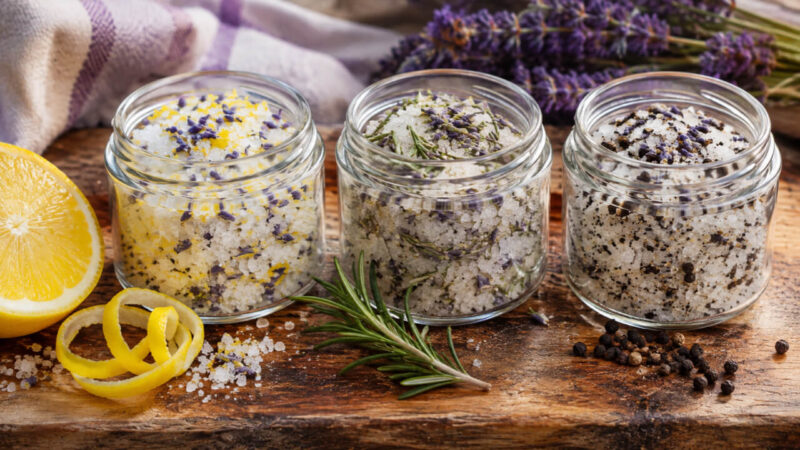
Once you’ve mastered the basic recipe, experiment with complementary flavors.
1. Lavender and Lemon Salt
Mix your basic lavender salt with ½ teaspoon of finely grated, completely dried lemon zest.
The citrus notes work particularly well with seafood, vegetables, and lemon-flavored baked goods.
Avoid adding fresh zest to a jar intended for pantry storage.
2. Lavender and Rosemary Salt
Add ½ teaspoon of crushed, dried rosemary to the original recipe.
This creates a more savory seasoning that’s especially useful for potatoes, roasted chicken, and focaccia.
3. Lavender and Black Pepper Salt
Stir ¼ teaspoon of freshly ground black pepper into your lavender salt.
The pepper introduces gentle warmth that balances lavender’s floral sweetness, making the mixture particularly suitable for savory dishes.
How to Store Homemade Lavender Salt
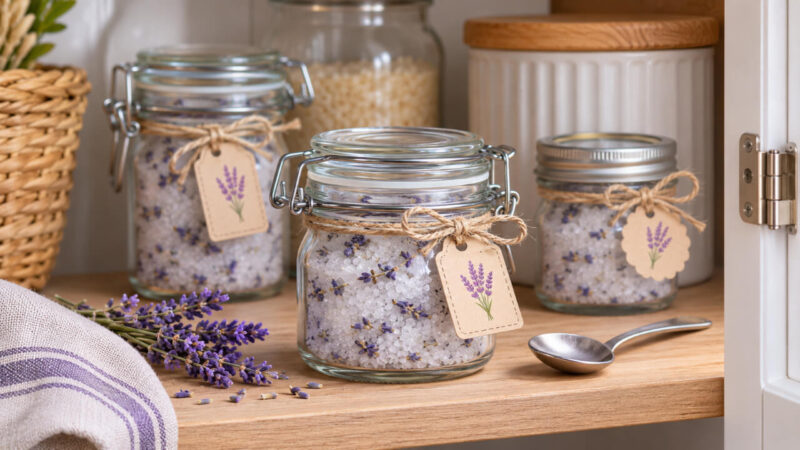
Proper storage helps preserve the fragrance and quality of your homemade blend.
Keep the salt in an airtight container in a cool, dry cupboard, away from direct sunlight and cooking steam.
For the strongest aroma, aim to use your batch within two to three months, although the fragrance may remain noticeable longer.
The important consideration is moisture.
Both your lavender and salt should be completely dry before mixing. Always use a dry spoon and avoid shaking the seasoning directly over steaming cookware.
If the mixture becomes damp, develops an unusual musty smell, or shows signs of mold, discard it.
For Homemade Gifts: Lavender salt looks attractive in small glass jars with handwritten labels. Include the ingredients, preparation date, and a reminder that it’s intended for culinary use.
Common Mistakes to Avoid
Even a simple two-ingredient recipe can produce disappointing results if the proportions or ingredients aren’t right.
- Using too much lavender: Start with the recommended amount for your chosen recipe version. Excessive lavender can easily dominate a dish.
- Choosing the wrong flowers: Use correctly identified culinary lavender, not decorative flowers from an unknown source.
- Adding fresh lavender to a stored blend: Fresh flowers contain moisture. Dry the buds thoroughly before combining them with salt.
- Grinding too aggressively: Overprocessing can turn coarse salt into powder and make the lavender pieces unpleasantly fine.
- Oversalting food: Remember that lavender salt still contributes sodium. It’s a flavored seasoning, not a low-sodium substitute.
- Using the entire batch for baking: The 100 g measurement refers to the salt needed to prepare your seasoning, not the amount to add to an individual dessert recipe.
FAQs
Can I Use Fresh Lavender to Make Lavender Salt?
For this pantry-stored version, dried culinary lavender is the better choice. Fresh buds introduce moisture, so dry them completely before making the blend.
What Type of Salt Works Best?
Coarse sea salt is an excellent all-purpose choice. Flaky salt is particularly attractive for finishing dishes, while fine sea salt works well when you need even distribution and accurate measurements in baking.
How Much Salt Do I Need for the Baking Version?
Use exactly 100 g of fine sea salt and 1 teaspoon of dried culinary lavender buds to prepare the batch. When baking, weigh out only the amount required by your recipe, such as 2 g, 3 g, or 5 g.
Does Lavender Salt Taste Sweet?
No. Lavender provides floral and herbal notes, but the mixture remains salty. It can complement sweet desserts without actually adding sugar.
Can I Make Lavender Salt Without a Grinder?
Absolutely. Gently crush the dried buds between clean fingers or with a mortar and pestle, then stir them into the salt. You can even leave the buds mostly whole for a more rustic mixture.