
What Happens to a Carrot If You Leave It in the Ground for a Second Year?
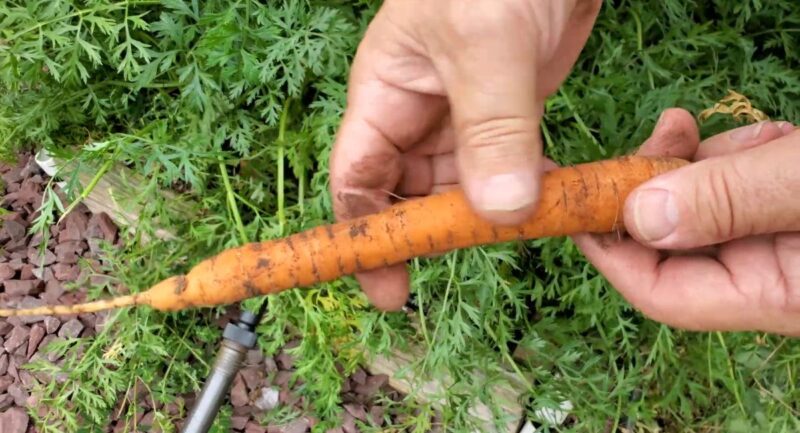
Most gardeners pull their carrots out of the ground long before the plants finish their natural life cycle. After all, the goal is usually to harvest sweet, crunchy roots, not to watch what happens when a carrot grows old.
But leave a healthy carrot in the soil through winter, and something interesting happens the following year.
Instead of producing a bigger, better carrot, the plant shifts its energy toward growing flowers and seeds. The root gradually becomes woody, loses much of its sweetness, and develops a tougher texture. Above ground, tall flowering stems emerge, eventually producing clusters of small white flowers.
This isn’t a sign that something has gone wrong. It’s exactly what carrots are designed to do.
Understanding this transformation can help you decide whether to harvest your carrots, leave them overwinter, or turn a few into a seed-saving experiment.
Carrots Are Biennial Plants, Not Annuals
The biggest misconception about carrots is that they naturally live for just one growing season.
Carrots (Daucus carota subsp. sativus) are actually biennial plants, meaning their normal life cycle spans two growing seasons.
During the first year, the plant concentrates on growing leaves and developing its thick, edible taproot. That root stores carbohydrates and other nutrients needed for future growth.
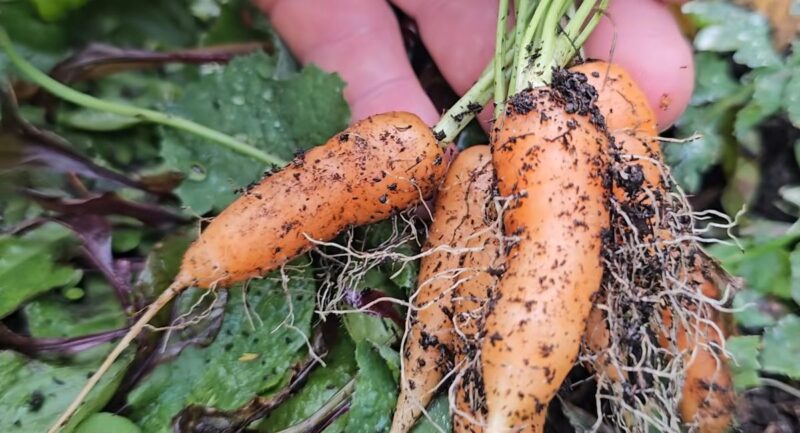
After experiencing sufficient cold, the surviving plant enters its reproductive phase during the second growing season.
Here’s how the two years compare:
Carrots are harvested as annual crops because their first-year roots are what people want to eat.
Epic Gardening explains common carrot-growing problems, including germination, root development, and how to improve growing conditions.
The second year is about reproduction, not producing another vegetable harvest.
This distinction is particularly important when planning an edible garden, where harvesting at the right stage makes an enormous difference to food quality.
What Happens to the Carrot Root During Its Second Year?
The most dramatic changes happen underground.
During its first year, a carrot stores energy in the root. When spring arrives after a sufficiently cold winter, the plant starts using those reserves to support rapid growth above ground.
Instead of continuing to develop a plump, sweet carrot, it redirects resources toward stems, flowers, and eventually seeds.
Three changes become particularly noticeable.
1. The Root Becomes Woody
As the carrot enters its reproductive phase, its internal tissues become increasingly fibrous.
The crisp texture you expect from a freshly harvested carrot gives way to something tougher and less pleasant.
Some roots develop a noticeably woody central core.
Cooking may soften the tissues somewhat, but it cannot restore the quality of a young carrot.
2. The Flavor Changes
Carrots are prized for their natural sweetness, which comes partly from sugars stored in their roots.
As the plant mobilizes those reserves for flowering, the root’s flavor deteriorates.
Older roots may taste less sweet, earthy, or distinctly bitter.
A second-year carrot isn’t automatically poisonous. However, a healthy but woody root is generally a poor choice for eating. Any carrot showing rot, mold, or other signs of spoilage should be discarded.
3. The Root Stops Being the Plant’s Priority
Don’t expect a carrot left for two years to become twice as large.
It may continue changing in shape and structure, but substantial second-year growth is directed toward reproduction.
If your objective is a bigger edible carrot, leaving it in the ground for another growing season is the wrong strategy.
Will a Carrot Flower If You Leave It in the Ground?
Yes. Provided it survives winter and receives the necessary cold exposure, a carrot will generally produce flowers in its second growing season.
The plant undergoes a process called vernalization, in which prolonged cool temperatures help trigger its transition toward flowering.
Once conditions become favorable, new foliage appears, followed by a tall, branching flower stalk.
The flowers are surprisingly attractive.
They form broad, umbrella-shaped clusters known as umbels, typically consisting of numerous tiny white blossoms. Their appearance resembles Queen Anne’s lace, which makes sense because wild carrot and cultivated carrot belong to the same species.
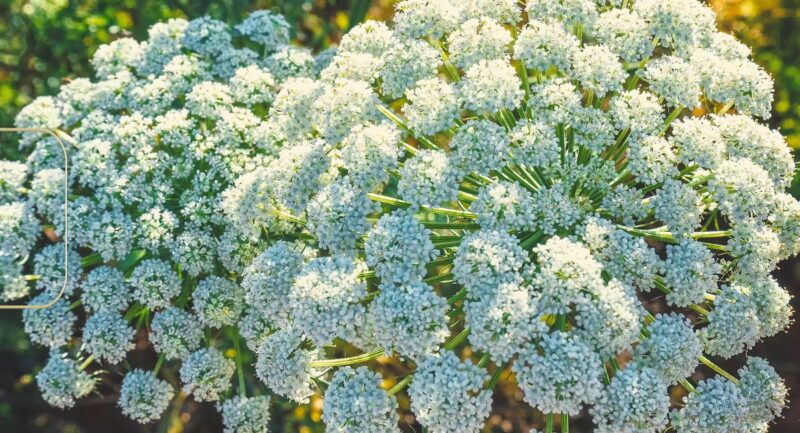
The flowering stems can rise several feet above the ground, making a second-year carrot look remarkably different from the compact vegetable plant gardeners recognize.
These flowers also attract beneficial insects, including bees, flies, and small parasitic wasps.
If you’re interested in combining vegetables with pollinator-friendly planting, consider growing borage at home. Its flowers provide another resource for visiting insects.
However, flower production isn’t guaranteed. A carrot may rot during winter, suffer severe freezing damage, or fail to receive sufficient chilling.
Can You Harvest Carrots After Leaving Them in the Ground All Winter?
Absolutely. In fact, overwintering carrots can be an excellent way to extend your harvest.
The important distinction is between storing carrots in the ground through winter and letting them enter their second growing season.
Carrots can remain sweet and crisp through cold weather, provided they are protected from serious freezing damage and excessive moisture.
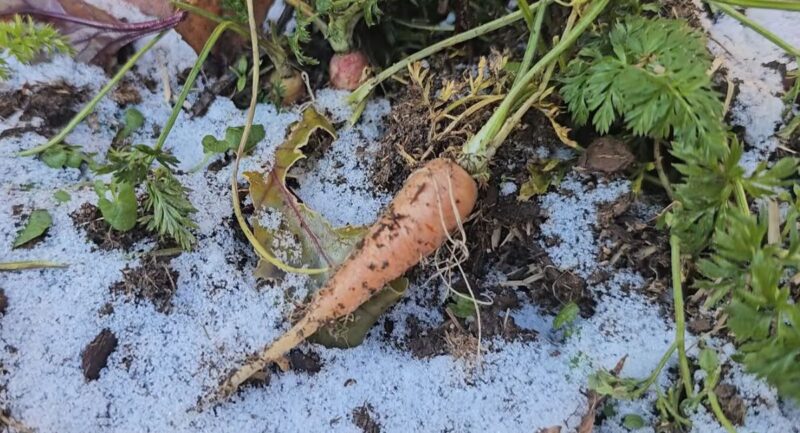
Some even develop a sweeter flavor during cool conditions.
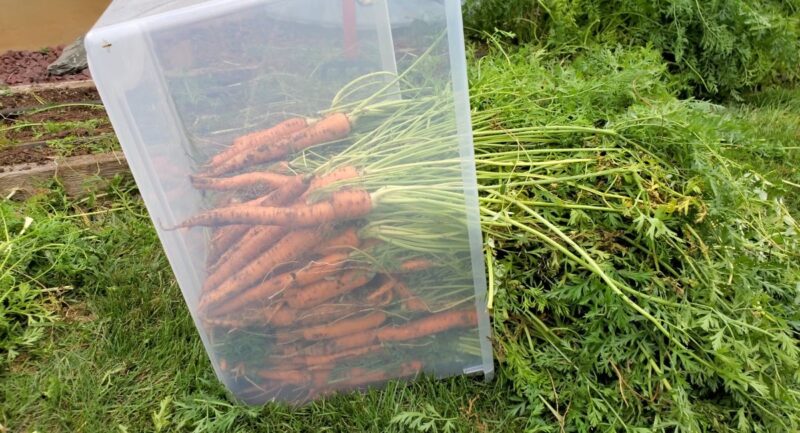
For successful overwintering:
- Cover the soil with a thick layer of clean straw or shredded leaves before severe freezes.
- Choose a well-drained location where winter rain won’t leave the roots waterlogged.
- Harvest periodically whenever the soil is workable.
- Remove the remaining edible carrots before vigorous spring regrowth begins.
In regions with exceptionally cold winters, digging and storing the roots in a suitable cool, humid environment may be more reliable.
The critical deadline is spring regrowth. Once the carrot begins devoting substantial energy to flowering, root quality declines quickly.
This is different from the flowering behavior of other vegetables. For instance, the developing flower shoots of broccoli rabe are harvested as food, while flowering in carrots generally marks the end of the desirable root harvest. Our comparison of spigarello and broccoli rabe explores why harvest timing matters for those greens.
Can You Save Seeds From a Second-Year Carrot?
Yes, and this is arguably the best reason to let carrots complete their natural two-year life cycle.
Instead of harvesting the roots, you can allow selected plants to flower and produce seeds for future planting.
Carrot seed saving requires patience, but the process is straightforward once you understand the basics.
How to Collect Carrot Seeds
Select healthy plants
Overwinter the roots
Allow flowering
Wait for seeds to mature
Collect and dry the seeds
Store the cleaned seeds in a labeled container in a cool, dry location.
There is one significant complication: carrots are insect-pollinated and readily cross-pollinate with other flowering carrot varieties, including wild carrot where it grows nearby.
Seeds collected from hybrid (F1) carrots may also produce plants that differ considerably from their parents.
For gardeners serious about maintaining a particular variety, isolation and growing several parent plants are important. Seed Savers Exchange provides detailed guidance on carrot seed production and isolation distances.
Should You Actually Leave Carrots in the Ground for Two Years?
That depends entirely on what you’re trying to achieve.
University of Wyoming Extension explains the advantages and disadvantages of leaving carrots in the ground for a second growing season.
- You want to collect your own carrot seeds.
- You’re interested in observing a biennial plant’s complete life cycle.
- You have space for flowering plants that support pollinating insects.
- You want sweet, tender carrots for cooking.
- Your vegetable garden has limited growing space.
- You don’t want tall flower stalks occupying a bed through summer.
For a small garden, keeping just a few healthy carrots for seed production can make more sense than sacrificing an entire bed.
And if encouraging pollinators is your priority, dedicated flowering plants often provide a more practical approach. For example, Tartarian aster can supply flowers later in the growing season, complementing the earlier blooms of second-year carrots.
FAQs
Will a Carrot Grow Back Every Year?
No. Carrots are biennials, not perennials. They normally produce flowers and seeds during their second growing season and then die. New carrots can grow from the seeds they leave behind, but the original plant doesn’t continue indefinitely.
How Tall Can a Second-Year Carrot Grow?
Flowering carrot plants can reach approximately 3–5 feet (90–150 cm), depending on the variety and growing conditions. Their tall, branching stems look very different from first-year carrot foliage.
Can You Eat a Carrot After It Flowers?
A carrot doesn’t automatically become toxic when it flowers, but its root generally becomes woody, fibrous, and less flavorful. Harvesting before flowering is strongly recommended for eating quality.
Will Carrots Reseed Themselves?
Yes. If mature seeds fall onto suitable soil, some may germinate and produce new plants. However, self-sown carrots aren’t guaranteed to grow where you want them, and their characteristics may vary if cross-pollination occurred.